 MCROC
What AI-assisted development achieves today.
This is where we test how far AI agents, open data and our own hardware can take us. These are experiments, not products — but each one shows a technique we also use in client projects.
Kistadrift — a multiplayer game in one week
Started as a hackathon project: drive a delivery van through a real city, orders at real addresses, city traffic and competitors. Eight days passed from the first commit to a playable multiplayer game with two cities. AI agents wrote most of the code; every step was planned and reviewed in a ticket.
- 351 commits in eight days, around 80 % of them together with AI agents.
- Münster and Norderstedt in 3D, built from OpenStreetMap and official building data.
- Up to seven drivers in one room, the server computes traffic and scores; split screen without a server.
- Radio music generated with an open music model on our own hardware, radio messages with local speech output.
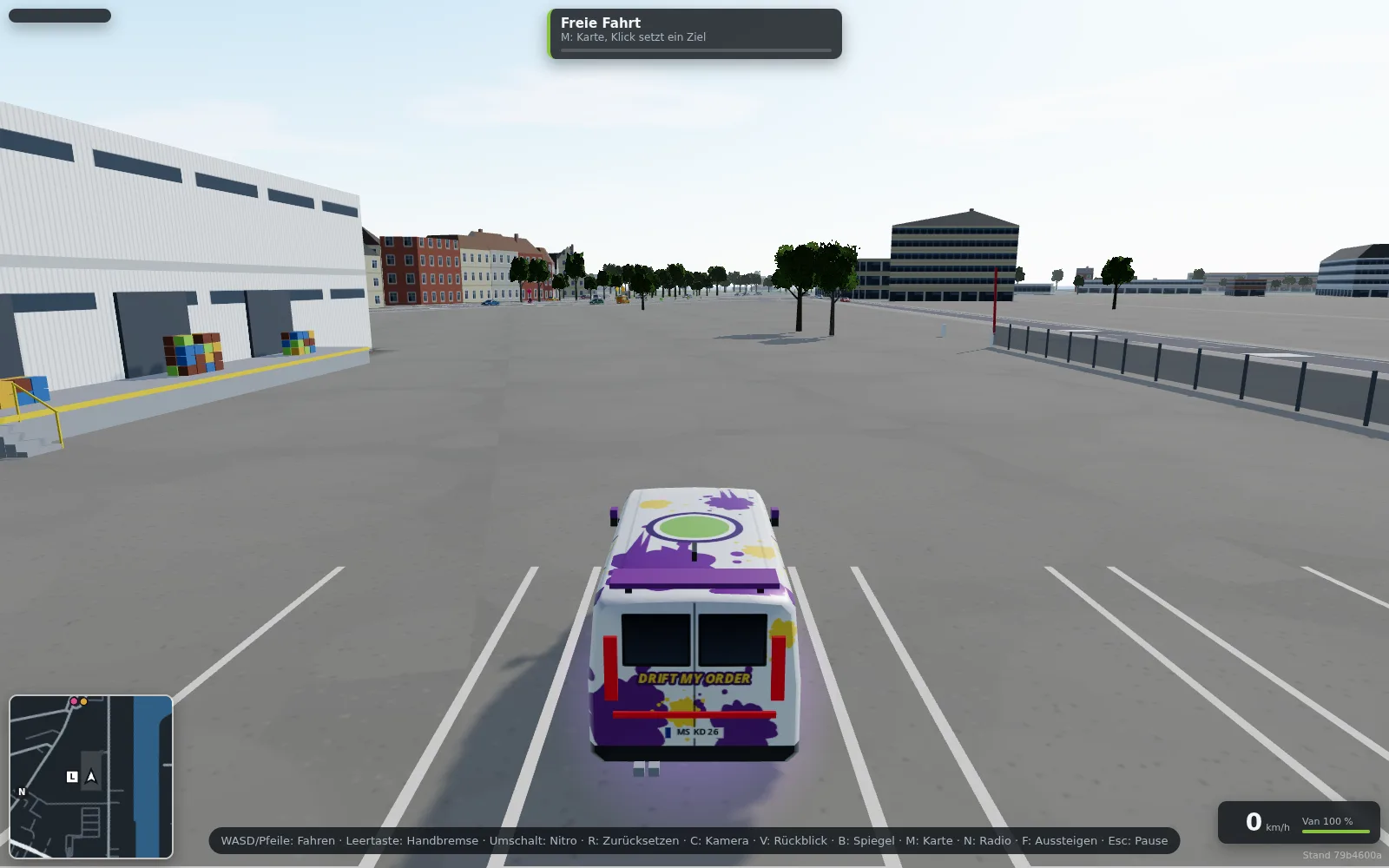
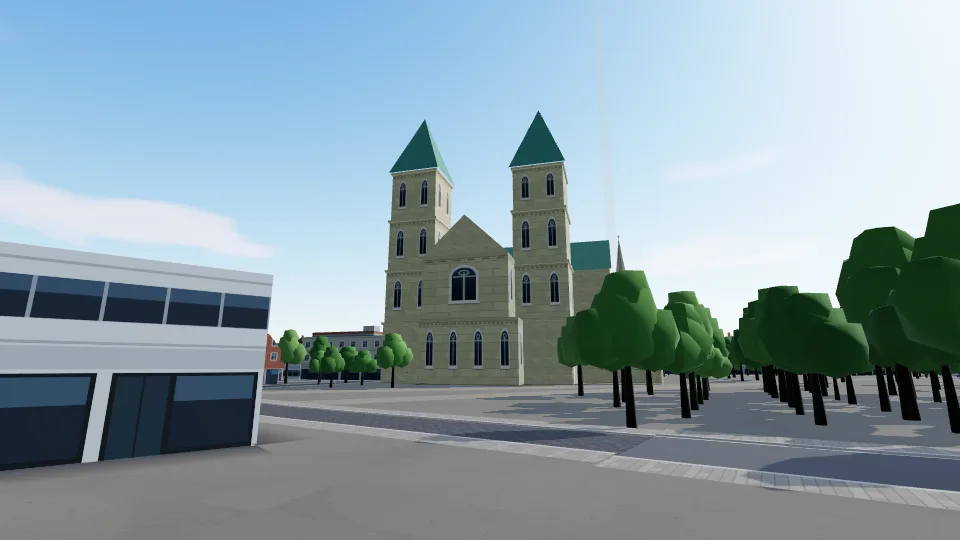
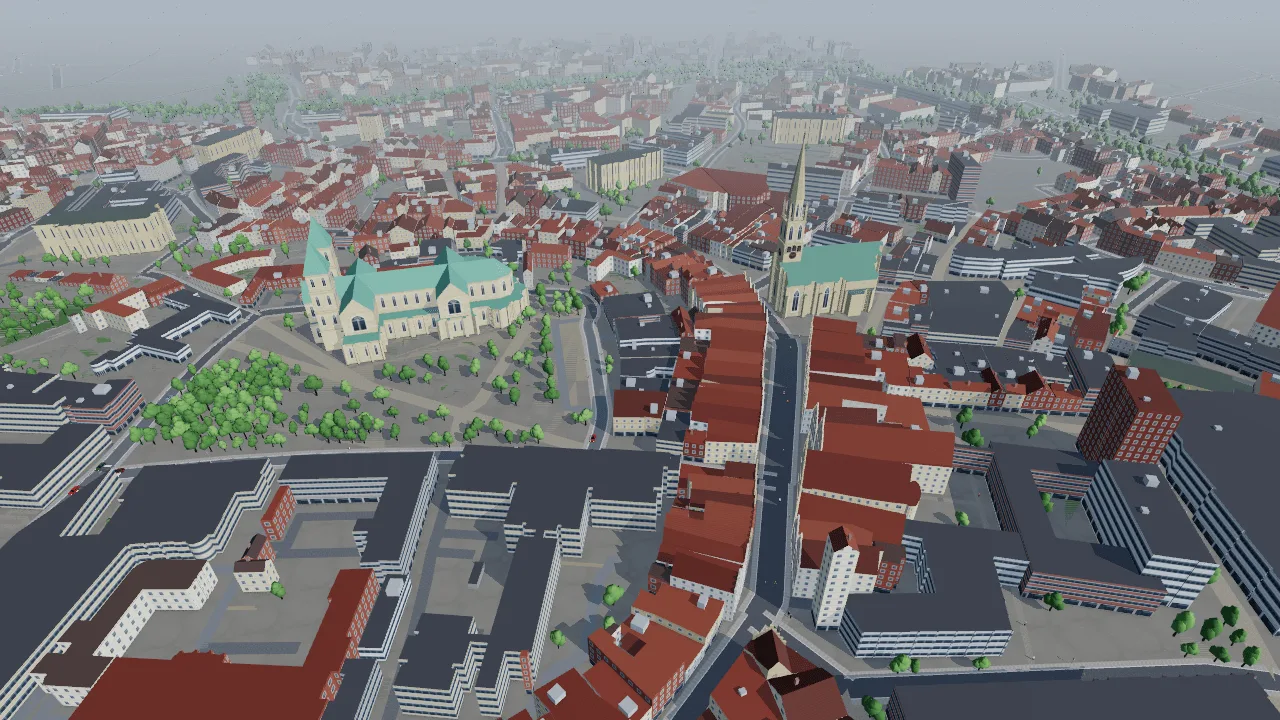
Map data © OpenStreetMap contributors (ODbL); buildings Münster: Geobasis NRW (dl-de/zero-2.0); Norderstedt: © GeoBasis-DE/LVermGeo SH/CC BY 4.0 and LGV Hamburg (dl-de/by-2.0), modified.
The same city in Unreal Engine
How far do you get when you build the same part of the city in a large game engine instead of the browser? An AI agent operates the Unreal Engine 5.8 editor itself — through scripts and the engine’s new MCP interface: creating levels, starting the game, taking pictures.
- Unreal Engine 5.8, terrain and buildings from the same open geodata.
- The agent drives the editor via MCP (Model Context Protocol) and Python.
- Built in CI on our own Windows machine with a graphics card.
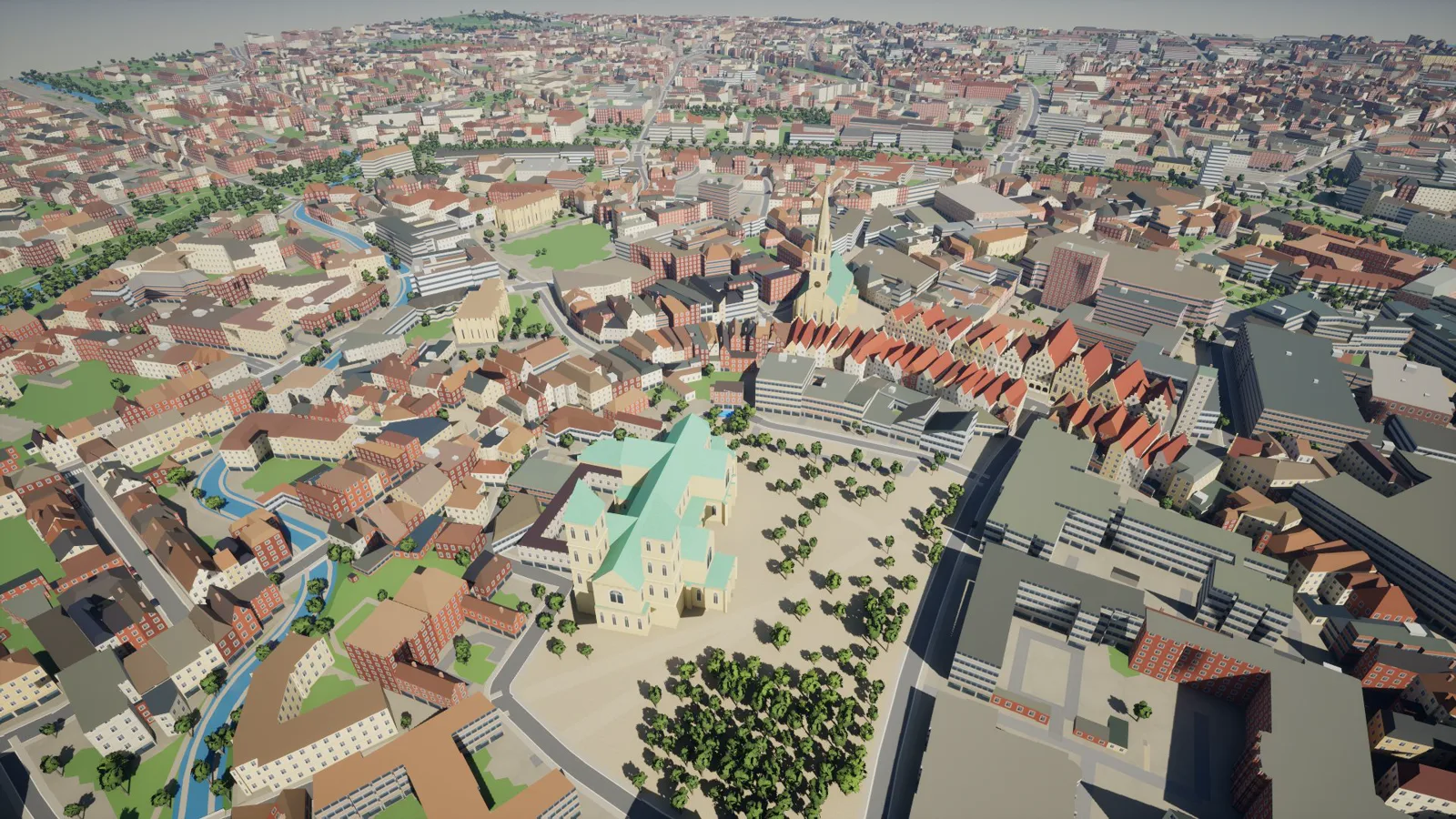
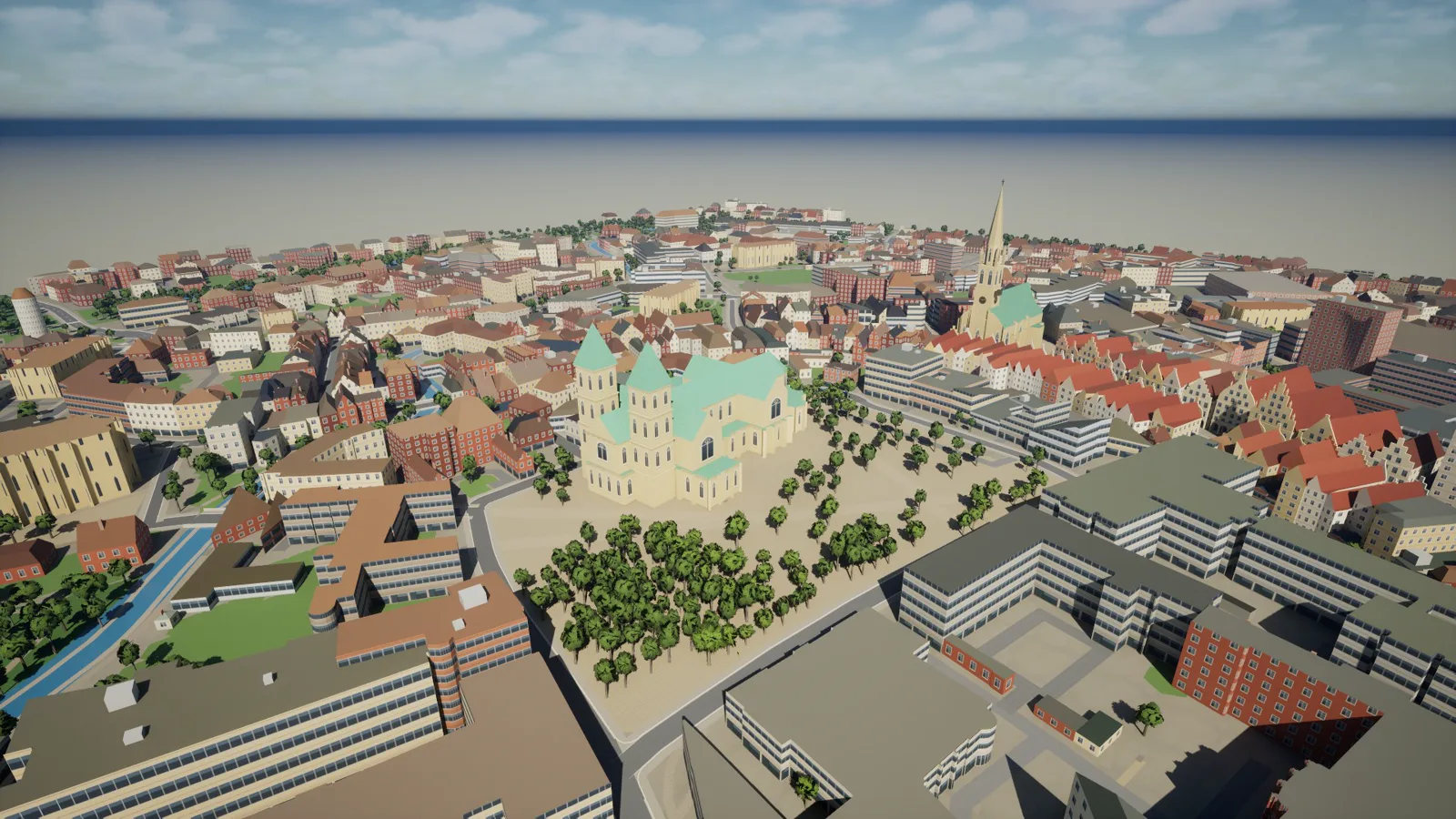
Map data © OpenStreetMap contributors (ODbL); buildings: Geobasis NRW (dl-de/zero-2.0).
A real place as a multiplayer world
In another project a real place becomes a playable 3D world: terrain from elevation data, the building from its floor plan, the surroundings from open maps. What is interesting is less the game than the workshop behind it.
- Terrain, building and navigation mesh are generated by script from geodata, not built by hand.
- Server-authoritative multiplayer from the start, with computer opponents.
- Automated tests without graphics on Linux: server and clients play against each other.
- Every merge builds the Windows version and redeploys the game server.
The same workshop builds your software.
Planning in tickets, AI agents for implementation, tests and delivery on every merge — that is also how SouveraLotse and client projects are built. Fast, but reviewed.